

In industrial distribution, success depends on one key ability: keeping demand, supply and resources in sync. That balance doesn’t happen by chance: It’s the result of deliberate planning, data-driven decision-making and cross-functional collaboration.
That’s exactly why mSupply replies on Sales, Inventory, and Operations Planning (SIOP). When done right, SIOP helps distributors improve service levels, control costs and stay agile in the face of constant market fluctuations.
At its core, SIOP connects strategy with execution. It brings together sales, operations, inventory management, finance and supply chain teams under one unified plan – ensuring everyone is working from the same playbook.
Instead of reacting to problems after they occur, SIOP helps leaders make proactive decisions that support long-term business goals. For industrial distributors such as mSupply that means better inventory control, faster response to demand changes and a stronger bottom line.
The Key Functions Behind SIOP
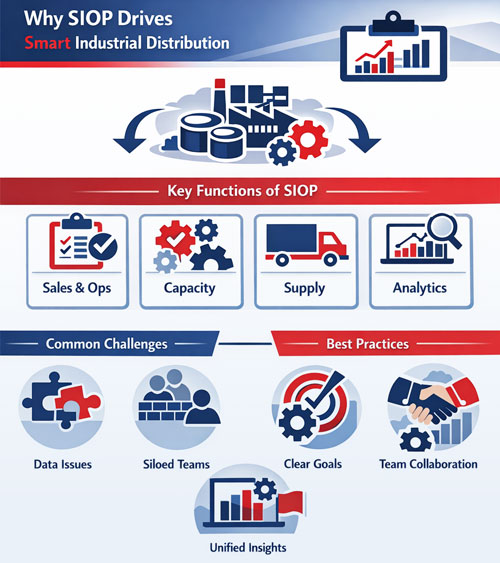
SIOP is more than a monthly meeting or a spreadsheet exercise. It’s a structured process built around several essential functions:
- Sales and Operations Planning: Aligns sales forecasts with production and inventory capacity, so teams can adjust plans quickly based on real-time data.
- Capacity Planning: Ensures labor, equipment and production schedules are ready to meet fluctuating demand efficiently.
- Supply Planning: Focuses on sourcing and delivery strategies, supplier collaboration and contingency planning to keep product flow consistent.
- Data Integration and Analytics: Combines sales, production and financial data into a single view. With the right analytics tools, leaders can gain insights that lead to faster, smarter decisions.
Together, these functions create a unified approach to balancing demand and supply – the heart of distributing the Right Products. Right Now.™
Common SIOP Challenges (and How to Solve Them)
Implementing SIOP isn’t easy. It requires coordination across multiple departments, each with its own priorities. Common roadblocks include:
- Data integration issues: Merging information from different systems can be tough. A centralized data platform improves accuracy and visibility.
- Cultural resistance: Departments often work in silos. Leadership must promote collaboration and shared accountability.
- Technology and data literacy gaps: Teams need the right tools and training to make data-driven decisions.
- Lack of leadership support: Executive sponsorship ensures SIOP receives the time, attention and resources needed to succeed.
- Market volatility: Rapid changes in demand or supply chains require flexible, adaptive planning — a core principle of effective SIOP.
Best Practices for Stronger SIOP Results
Building a best-in-class SIOP process starts with clarity and consistency. Distributors should begin by defining clear objectives. Set measurable goals such as improving forecast accuracy, reducing inventory costs, or increasing service levels.
Next, encourage cross-functional collaboration. Regular review meetings and shared dashboards keep everyone aligned.
At mSupply, we’ve worked to integrate systems and processes. By unifying sales, production and financial data, we’ve been empowered to make real-time decisions. That includes optimizing resource allocationwhen we use our collective data to direct capital, labor and materials where they’ll have the greatest impact.
Finally, we make a point of setting realistic targets. Our focus remains on continuous improvement, not perfection.
In the end, SIOP is more than a planning process – it’s a strategic management discipline that connects every part of the business.
For industrial distributors such as mSupply, mastering SIOP means achieving the right balance between demand, supply and resources — all while building the agility needed to thrive in a changing marketplace.
With strong leadership, unified data and collaborative execution, SIOP becomes not just a tool for efficiency, but a pathway to sustainable growth.
