
Let’s get one thing straight: AI is not rolling up to a jobsite with a toolbag. It is not crawling in an attic in July. It is not sticking its hands behind a dryer while trying not to lose a knuckle. It can’t sweat a fitting, recover refrigerant or calm an irritated homeowner who swears the system “just stopped working on its own.”
Only your techs do that. Only your techs can do that.
But AI is already changing how fast techs work, how accurately they troubleshoot and how smoothly your business runs. That means the shops that grab those advantages early will leave the others chasing invoices.
Here’s the reality: AI is not the threat. Falling behind is. New tools have hit the market before, but they’ve never replaced professionals. They’ve simply made the pros who use them unstoppable.
Press tools didn’t replace plumbers. Digital gauges didn’t replace HVAC techs. What happened? The ones who adopted them first started outrunning everyone who didn’t.
AI is the same story, only louder.
Your customers want quick answers, tighter schedules and fewer callbacks. Your techs want backup when they hit something weird. AI gives them that. It’s not magic. It’s not robots taking human jobs. It’s just fast, reliable help that cuts through the noise.
You can count on AI to speed up:
- Troubleshooting
- Scheduling
- Inventory management
- Customer communication
Accomplishing the same goal faster
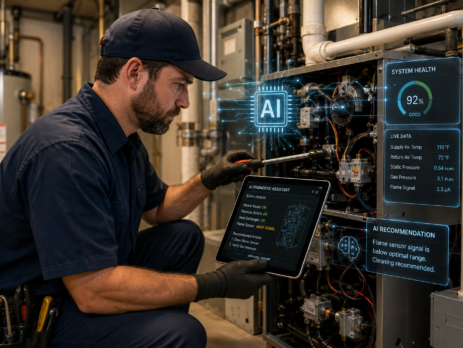
Think about a junior tech staring at a strange error code. Sure, they can call the senior guy, scroll through forums or dig through manuals. But AI gives them another option. With one quick prompt, they’ll receive a handful of likely causes and a suggested path. It’s still up to them to diagnose and make the repair. AI is just helping them get there – and off to their next job – faster.
It’s the same thing on the business side. From routing and estimates to follow-ups and inventory reminders, AI picks up the boring pieces so your people can do the real work.
Throughout our industry, we have owners who spend half their week putting out fires, dispatchers juggling routes with four phones ringing and technicians stretched thin. AI has the potential to smooth those rough edges so your operation feels more dialed in.
The companies using it will produce techs who get up to speed faster. They will close jobs with fewer second trips. They will run tighter schedules and make fewer mistakes. They will take on more work with the same crew because their team stops wasting time on avoidable slowdowns.
And that is where the gap opens. It’s not because AI replaced anyone, but because it turned good techs into great ones.
There’s no doubt: Your team plus AI? It beats AI by itself every time. But your team without AI? They are going to work twice as hard to keep up.
If you want your shop to be ready for what is coming next, start small. Try AI for one workflow, one team or one type of job. Watch the difference it makes, then scale it.
After all, that’s exactly what your competitors will be doing.
